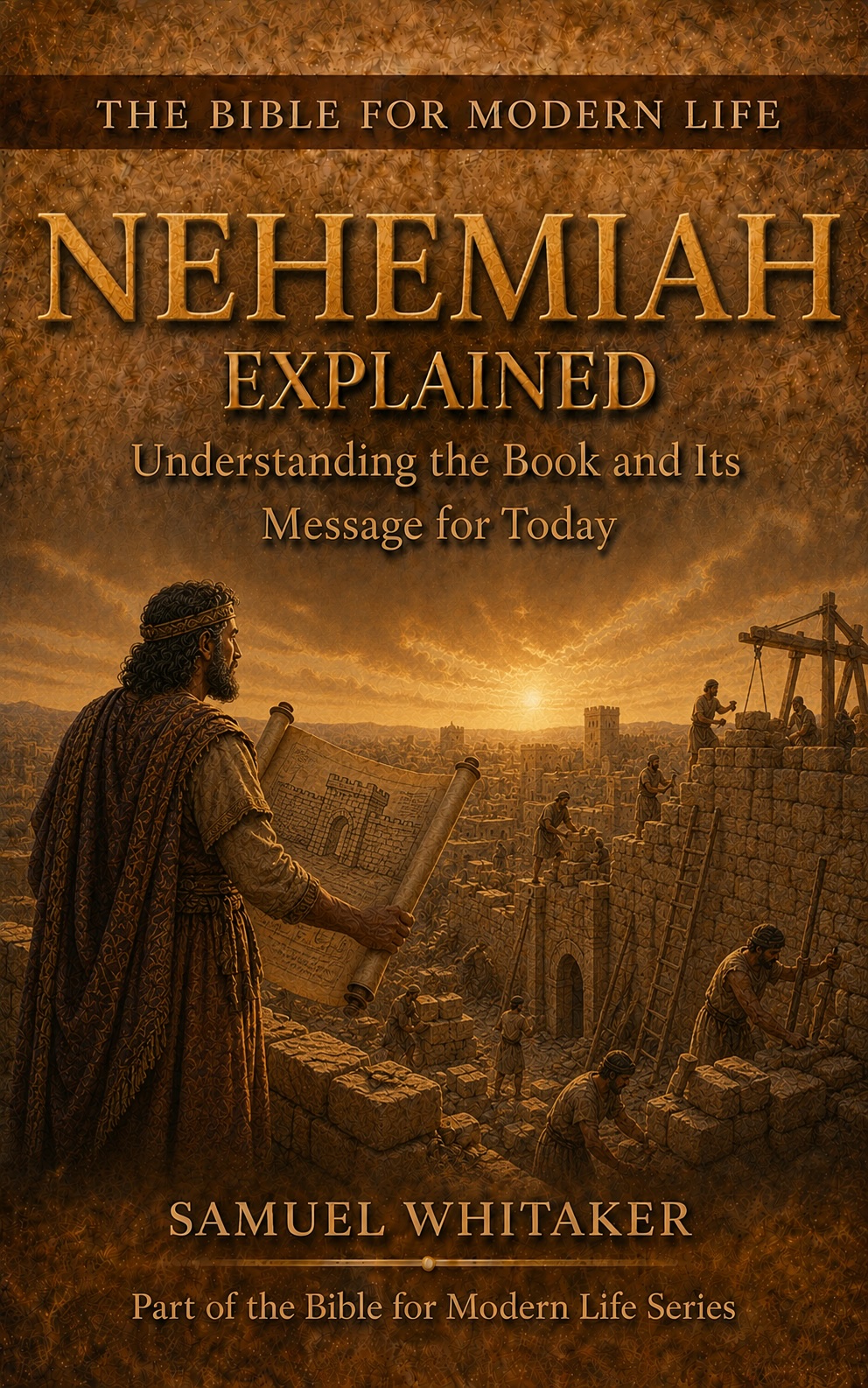
Nehemiah Bible Study Guide
This Nehemiah Bible study guide is built around a man who heard bad news from home and could not let it go. Nehemiah was cupbearer to the Persian king Artaxerxes, a trusted position far from Jerusalem. When he learned that the city’s walls were still broken down and its people living in disgrace, he wept, fasted, and prayed for months before asking the king for permission to go and rebuild.
Much of the book is written in Nehemiah’s own voice. It follows him from the Persian court to a night inspection of Jerusalem’s ruins, through ridicule, threats, and internal injustice, to the completion of the wall in fifty-two days. Then the focus shifts from stones to people, as Ezra reads the law aloud, the community confesses its sin, and the people commit themselves to the covenant again.
Nehemiah Explained examines the historical background, narrative structure, and major themes of the book in a way that is clear and accessible for modern readers. Each chapter explores the meaning of the text while also considering how its lessons speak to the challenges people face today.
Part of the Bible for Modern Life Series, this Nehemiah Bible study guide helps readers engage the message of Nehemiah thoughtfully and understand why its story continues to matter.
Inside This Book
- The historical world behind Nehemiah
- The meaning of its most important narratives
- The themes that connect Nehemiah to the rest of Scripture
- How its message still applies to modern life
What This Nehemiah Bible Study Guide Covers
- The historical and cultural world of the Persian Empire and the struggling province of Judah
- The literary structure of Nehemiah, its first-person memoir sections, and its close connection to Ezra
- Key themes — prayer and action, leadership, opposition, justice within the community, the public reading of Scripture, confession, and covenant renewal
- The major figures of Nehemiah — Nehemiah, Artaxerxes, Ezra the scribe, and the opponents Sanballat, Tobiah, and Geshem
- Nehemiah’s prayer and request to the king, the rebuilding of the wall under threat, the confrontation over debt and exploitation, the reading of the law, and the dedication of the wall
- Why the book ends not with triumph but with Nehemiah confronting the people’s renewed compromise
- Common misunderstandings that keep readers from engaging with Nehemiah fully
- What Nehemiah means for modern readers and why its questions about leadership, perseverance, and lasting renewal remain urgent today
Why Nehemiah Still Matters
Nehemiah is often read as a leadership manual, and it does show a leader who prays, plans, organizes, and refuses to be intimidated. But the book is more honest than most leadership stories. Nehemiah’s opponents mock the work, spread rumors, plot violence, and try to lure him into a trap. The builders work with tools in one hand and weapons close by.
The hardest problems are not all outside the wall. In the middle of the project, the poor cry out that their own leaders are charging them interest and taking their land and children as payment. Nehemiah stops to deal with it, and he refuses the governor’s food allowance himself rather than add to the people’s burden.
The book also refuses a neat ending. After the wall is dedicated and the covenant renewed, Nehemiah returns to find the same compromises creeping back, and the book closes with him confronting them again. Lasting renewal, Nehemiah shows, is not a single event but a commitment that has to be kept.
For modern readers rebuilding something broken, leading under pressure, or discovering that a good start does not guarantee a faithful finish, Nehemiah offers a framework that has lost none of its force.
Who This Book Is For
Nehemiah Explained is written for general readers — anyone who wants to understand one of the Bible’s most practical historical books more deeply, whether approaching it for the first time or returning to it after hearing it used mainly as a model for leadership or building campaigns. It is equally useful for personal study, small group discussion, or anyone preparing to teach or preach through Nehemiah. No prior knowledge of biblical scholarship is required to use this Nehemiah Bible study guide.
What Makes This Essential 10-Chapter Nehemiah Bible Study Guide Different
Most guides to Nehemiah treat it as a set of leadership principles drawn from the wall-building chapters, leaving the rest of the book in the background. This Nehemiah Bible study guide reads the book as a unified whole, showing how the rebuilding of the wall, the reading of the law, the renewal of the covenant, and the reforms of the final chapter form a single argument about restoration, faithfulness, and a people rebuilt around God’s Word. Each chapter builds on the last, moving from historical context to literary structure to practical relevance for modern readers.
About the Bible for Modern Life Series
The Bible for Modern Life Series by Samuel Whitaker is designed to help modern readers engage with Scripture more deeply — one book at a time. Each volume examines a single book of the Bible in depth, exploring its historical background, literary structure, recurring themes, and enduring relevance for readers today. Currently available: Genesis Explained, Exodus Explained, Leviticus Explained, Numbers Explained, Deuteronomy Explained, Joshua Explained, Judges Explained, 1 Samuel Explained, 2 Samuel Explained, 1 Kings Explained, 1 Chronicles Explained, 2 Chronicles Explained, Ezra Explained, Nehemiah Explained, and Matthew Explained. Nehemiah Explained is the essential Nehemiah Bible study guide in the series, available on Amazon.
Ready to understand Nehemiah in full?
Buy on Amazon →