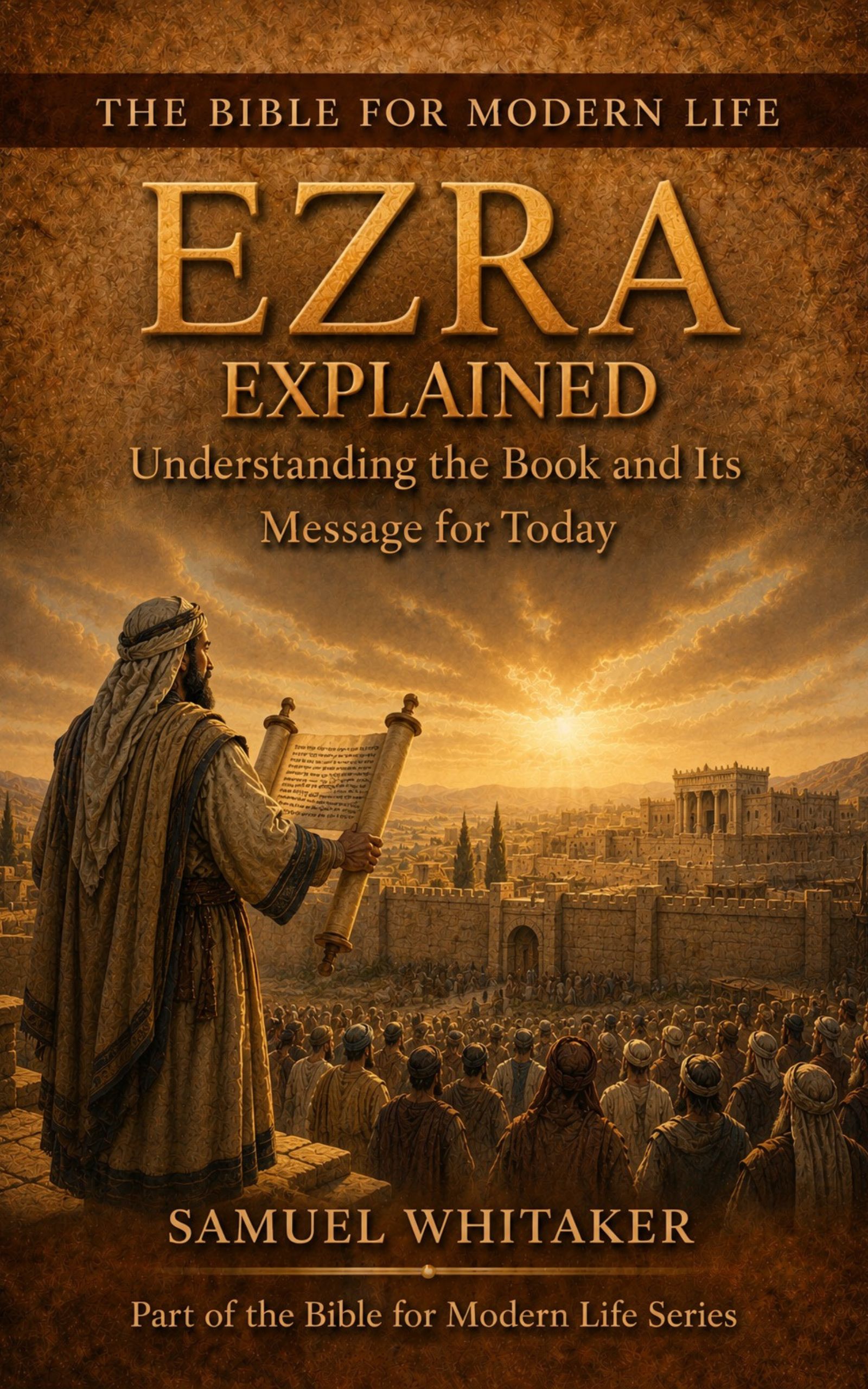
Ezra Bible Study Guide
This Ezra Bible study guide is built around one of the most important and least celebrated moments in Israel’s story — the return from exile. When the Persian king Cyrus allowed the exiles in Babylon to go home, only some went. Those who did came back to a ruined city and a burned temple, surrounded by neighbors who did not want them there.
The book of Ezra follows two waves of return. The first, under Zerubbabel and Jeshua, rebuilds the altar and the temple through years of opposition and delay. The second, decades later, brings Ezra the scribe, a man devoted to the law of God, who arrives to find that rebuilding walls and buildings had not been enough to rebuild a people.
Ezra Explained examines the historical background, narrative structure, and major themes of the book in a way that is clear and accessible for modern readers. Each chapter explores the meaning of the text while also considering how its lessons speak to the challenges people face today.
Part of the Bible for Modern Life Series, this Ezra Bible study guide helps readers engage the message of Ezra thoughtfully and understand why its story continues to matter.
Inside This Book
- The historical world behind Ezra
- The meaning of its most important narratives
- The themes that connect Ezra to the rest of Scripture
- How its message still applies to modern life
What This Ezra Bible Study Guide Covers
- The historical and cultural world of the Persian Empire and the small returned community in Judah
- The literary structure of Ezra, its two returns separated by nearly sixty years, and its close connection to Nehemiah
- Why parts of the book are written in Aramaic and preserve official Persian correspondence
- Key themes — return and restoration, the temple, opposition, God’s hand at work through foreign kings, the authority of Scripture, and confession
- The major figures of Ezra — Cyrus, Zerubbabel, Jeshua, the prophets Haggai and Zechariah, Darius, Artaxerxes, and Ezra the scribe
- The laying of the temple foundation, the long delay in rebuilding, the temple’s completion, Ezra’s journey to Jerusalem, and his prayer of confession
- How to read the difficult crisis over mixed marriages at the end of the book in its covenant and historical context
- Common misunderstandings that keep readers from engaging with Ezra fully
- What Ezra means for modern readers and why its questions about starting over, perseverance, and spiritual renewal remain urgent today
Why Ezra Still Matters
Ezra is a book about what it actually takes to start over. The return from exile was the answer to generations of prayer, and yet the people who came home found hardship, resistance, and discouragement waiting for them. When the foundation of the new temple was laid, some shouted for joy while older people who remembered Solomon’s temple wept aloud, and the two sounds could not be told apart. Then the work stopped for years under pressure from opponents. Ezra does not present restoration as a single triumphant moment. It presents it as slow, contested, and often disappointing work that God sees through anyway, moving the hearts of foreign kings and raising up prophets to get his people building again.
The book also insists that rebuilding a place is not the same as rebuilding a people. Ezra arrives as a man who had set his heart to study the law of the Lord, to obey it, and to teach it, and his first response to the community’s compromise is not anger but grief and confession. For modern readers rebuilding a life, a family, a church, or a community after loss, Ezra offers an honest picture of renewal — one that takes opposition seriously, refuses easy shortcuts, and keeps returning to the Word of God as the foundation for everything else. It is a framework that has lost none of its force.
Who This Book Is For
Ezra Explained is written for general readers — anyone who wants to understand one of the Bible’s most overlooked historical books more deeply, whether approaching it for the first time or returning to it after years of familiarity with only a few of its scenes. It is equally useful for personal study, small group discussion, or anyone preparing to teach or preach through Ezra. No prior knowledge of biblical scholarship is required to use this Ezra Bible study guide.
What Makes This Essential 10-Chapter Ezra Bible Study Guide Different
Most readers treat Ezra either as a short historical bridge between Chronicles and Nehemiah or as a collection of lists, letters, and building reports with a troubling ending. This Ezra Bible study guide reads the book as a unified whole, showing how the return under Zerubbabel, the rebuilding of the temple, and the reforms under Ezra form a single argument about restoration, perseverance, and a people reshaped by Scripture. It addresses the hard passages directly rather than skipping them. Each chapter builds on the last, moving from historical context to literary structure to practical relevance for modern readers.
About the Bible for Modern Life Series
The Bible for Modern Life Series by Samuel Whitaker is designed to help modern readers engage with Scripture more deeply — one book at a time. Each volume examines a single book of the Bible in depth, exploring its historical background, literary structure, recurring themes, and enduring relevance for readers today. Currently available: Genesis Explained, Exodus Explained, Leviticus Explained, Numbers Explained, Deuteronomy Explained, Joshua Explained, Judges Explained, 1 Samuel Explained, 2 Samuel Explained, 1 Kings Explained, 1 Chronicles Explained, 2 Chronicles Explained, Ezra Explained, and Matthew Explained. Ezra Explained is the essential Ezra Bible study guide in the series, available on Amazon.
Ready to understand Ezra in full?
Buy on Amazon →