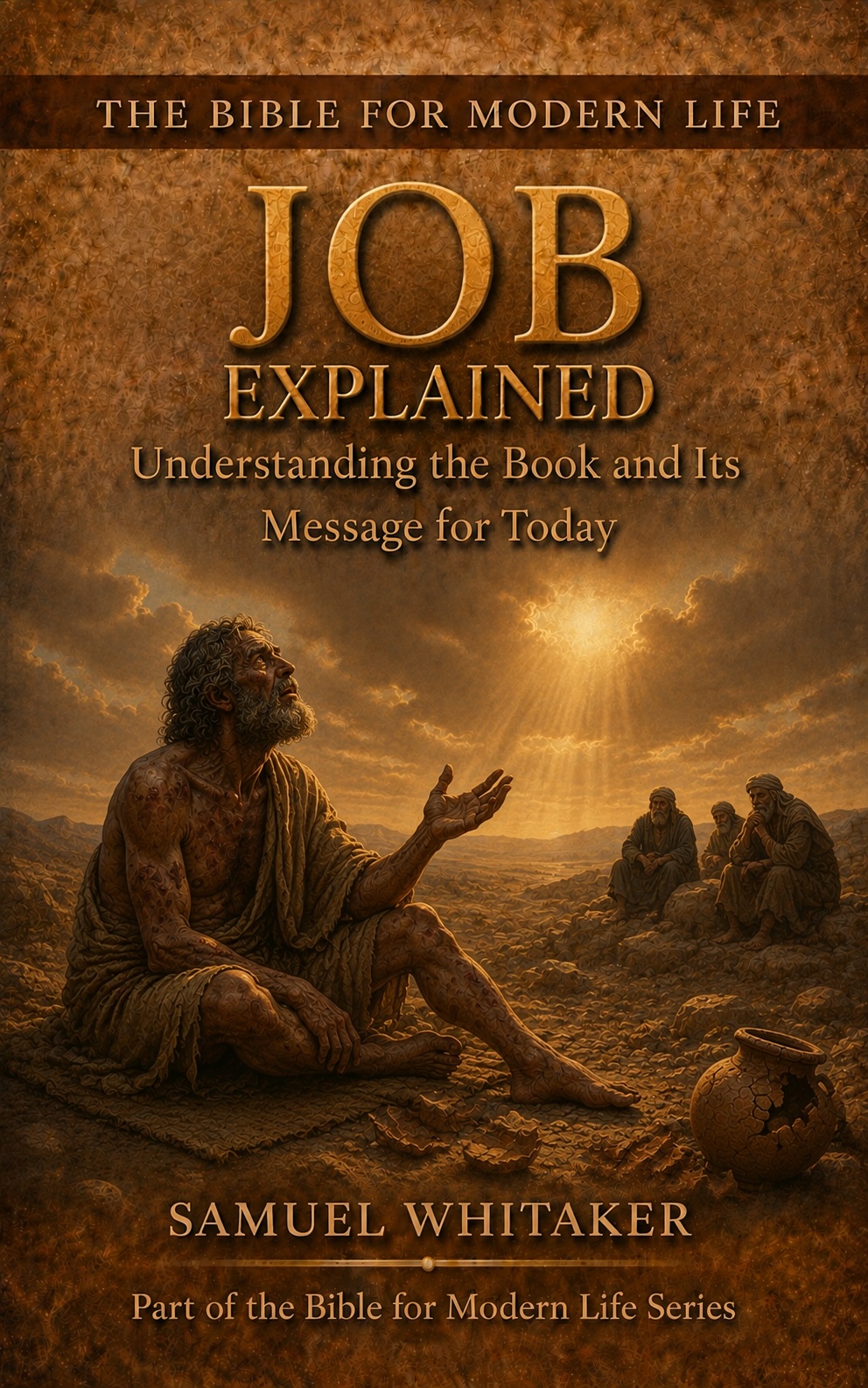
Job Bible Study Guide
This Job Bible study guide is built around the Bible’s most sustained wrestling with suffering. Job is introduced as a man who is blameless and upright, who fears God and turns away from evil. Then, in a single sequence of disasters, he loses his wealth, his servants, and all ten of his children. Soon after, his own body is struck with painful sores, and he sits in the ashes with nothing left.
Three friends come to comfort him and sit with him in silence for seven days. When they finally speak, they insist that suffering must be the result of sin, and that Job should confess and be restored. Job refuses to accept an explanation he knows is false. He argues, laments, protests, and demands a hearing from God himself. When God finally speaks out of the storm, he does not explain Job’s suffering. He reveals himself.
Job Explained examines the historical background, literary structure, and major themes of the book in a way that is clear and accessible for modern readers. Each chapter explores the meaning of the text while also considering how its lessons speak to the challenges people face today.
Part of the Bible for Modern Life Series, this Job Bible study guide helps readers engage the message of Job thoughtfully and understand why its story continues to matter.
Inside This Book
- The historical world behind Job
- The meaning of its most important passages
- The themes that connect Job to the rest of Scripture
- How its message still applies to modern life
What This Job Bible Study Guide Covers
- The world of ancient Near Eastern wisdom literature and where Job fits within the Bible’s wisdom books
- The literary structure of Job — a prose prologue and epilogue framing an extended poetic dialogue
- Key themes — suffering, justice, the limits of human wisdom, lament, integrity, and the presence and freedom of God
- The major figures of Job — Job, his wife, the accuser, the friends Eliphaz, Bildad, and Zophar, the young speaker Elihu, and God
- The heavenly scene of the prologue, the cycles of debate, the poem on wisdom in chapter 28, Job’s final defense, and God’s speeches from the whirlwind
- Why God rebukes the friends and says that Job, not they, has spoken rightly of him
- Common misunderstandings that keep readers from engaging with Job fully
- What Job means for modern readers and why its questions about suffering, faith, and honest prayer remain urgent today
Why Job Still Matters
Job is the book Scripture gives to people whose suffering does not make sense. It does not pretend that the righteous are always protected or that every loss can be traced to a cause. Job’s friends offer the tidy answer that everything happens for a reason the sufferer must have earned, and the book exposes that answer as both false and cruel.
Job himself is not patient in the quiet, passive way the phrase often suggests. He grieves, protests, questions God’s justice, and refuses to say what he does not believe. Yet he never stops speaking to God. His complaint is itself a form of faith — the refusal to let go of God even when God seems absent or hostile.
The answer Job receives is not an explanation but an encounter. God’s speeches from the whirlwind widen Job’s view to the vastness of a creation he did not make and cannot govern, and Job is changed not by understanding why but by meeting the one who is there.
For modern readers facing loss, illness, injustice, or the silence of God, and for anyone trying to sit with someone else in their pain without making it worse, Job offers a framework that has lost none of its force.
Who This Book Is For
Job Explained is written for general readers — anyone who wants to understand one of the Bible’s most profound and demanding books more deeply, whether approaching it for the first time or returning to it after knowing only its opening and closing chapters. It is equally useful for personal study, small group discussion, or anyone preparing to teach or preach through Job. No prior knowledge of biblical scholarship is required to use this Job Bible study guide.
What Makes This Essential 10-Chapter Job Bible Study Guide Different
Most readers know Job through its first two chapters and its last, skipping the long poetic dialogue in between where the real struggle of the book takes place. This Job Bible study guide reads the book as a unified whole, showing how the prologue, the debate with the friends, Elihu’s speeches, God’s answer from the storm, and the epilogue form a single exploration of suffering, wisdom, and faith that holds on when answers do not come. Each chapter builds on the last, moving from historical context to literary structure to practical relevance for modern readers.
About the Bible for Modern Life Series
The Bible for Modern Life Series by Samuel Whitaker is designed to help modern readers engage with Scripture more deeply — one book at a time. Each volume examines a single book of the Bible in depth, exploring its historical background, literary structure, recurring themes, and enduring relevance for readers today. Currently available: Genesis Explained, Exodus Explained, Leviticus Explained, Numbers Explained, Deuteronomy Explained, Joshua Explained, Judges Explained, 1 Samuel Explained, 2 Samuel Explained, 1 Kings Explained, 1 Chronicles Explained, 2 Chronicles Explained, Ezra Explained, Nehemiah Explained, Job Explained, and Matthew Explained. Job Explained is the essential Job Bible study guide in the series, available on Amazon.
Ready to understand Job in full?
Buy on Amazon →